
Game A • Estimation planning - Overview

Estimation planning: staff selection & sequence of statistical steps

Learning objective

Teach students how to plan a software estimation effort by selecting team members with the appropriate skills in software sizing and linear regression statistics, and by ordering the correct analytical steps to build a valid size-effort model from historical project data.

How the game works

  1. Select one employee from six available profiles based on their measurement and statistics skills.
  2. Work on two datasets, one after the other: 30 In-House Projects, then 100 ISBSG external projects.
  3. For each dataset, choose the proper sequence of statistical steps required to complete the regression model.
  4. End the game to see the final score across both rounds.

The same employee cannot be selected for both datasets
Employee selection criteria

Each of the six employee profiles is defined by two visible attributes:

  • Sizing Skill - whether the employee can perform software size measurement
  • Statistics Level - their competency in linear regression statistics: Top, Fair, or Low

Selecting the right profile for each dataset type is essential for a correct estimation plan.

Statistical steps

Five analytical steps are used to build and interpret the regression model. Each is represented by an icon in the game.

Step Name Description
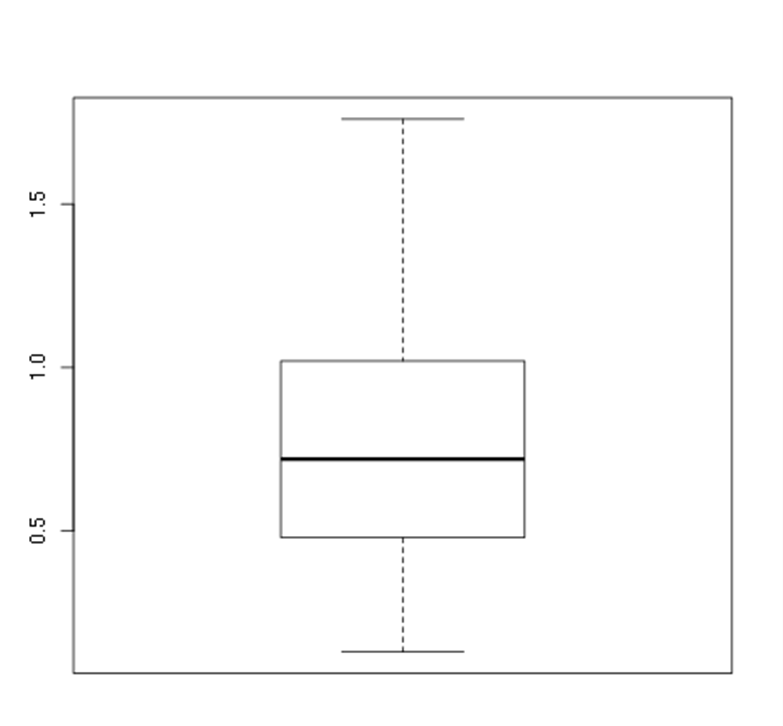
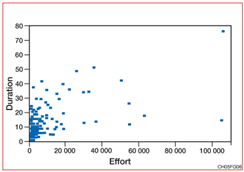
Outlier step Outlier Identify projects too large that may mislead interpretation of the model's strength.
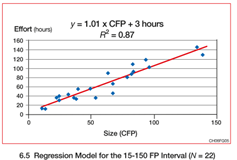
R-square step R-square (R²) Measure the strength of the size-effort relationship.
Measurement step Measurement Apply knowledge of early software sizing and prepare the data.
Descriptive step Descriptive Compute basic statistics describing the quantitative sample data.
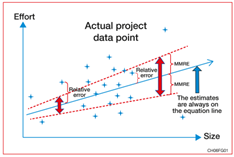
MMRE step MMRE Analyse the dispersion of projects across the regression model using the Mean Magnitude of Relative Error.

Available sequences

For each dataset, the player selects two sequences from the ten options below. The correct pair depends on the dataset type and the skills of the selected employee.

Steps performed (in order) Visual sequence
Descriptive → Outlier → R-square DescriptiveOutlierR-square
Descriptive → R-square → Outlier → R-square DescriptiveR-squareOutlierR-square
Measurement → Descriptive → Outlier → R-square MeasurementDescriptiveOutlierR-square
Descriptive → Outlier → R-square → MMRE DescriptiveOutlierR-squareMMRE
Measurement → Descriptive → Outlier → MMRE MeasurementDescriptiveOutlierMMRE
Measurement → Descriptive → R-square → MMRE MeasurementDescriptiveR-squareMMRE
R-square → Outlier → R-square → MMRE R-squareOutlierR-squareMMRE
Measurement → Descriptive → Outlier → R-square → MMRE MeasurementDescriptiveOutlierR-squareMMRE
Descriptive → R-square → Outlier → R-square → MMRE DescriptiveR-squareOutlierR-squareMMRE
Measurement → Descriptive → R-square → Outlier → R-square → MMRE MeasurementDescriptiveR-squareOutlierR-squareMMRE

Teaching notes

This game introduces students to the planning dimension of software estimation: who should be involved and what steps should be followed before any estimate is produced.

Suggested use in class

  • Discuss the differences between in-house project data and industry benchmark data (ISBSG)
  • Explain why sizing skill and statistics competency matter for building a valid model
  • Have students justify which employee profile fits each dataset type and why
  • Walk through the logic of each step (Descriptive, Outlier, R-square, MMRE, Measurement) before students select sequences
  • Compare the sequences of step chosen for each dataset and discuss how the data source influences the required steps

What to evaluate

  • Ability to match employee skills to dataset requirements
  • Understanding of the role of each analytical step in building a regression model
  • Correct selection and ordering of statistical steps per dataset
  • Recognition that different data sources may require different analytical approaches

Downloads & documentation

Access game files, manuals, and supporting datasets.

Questionnaire: game-a-questionnaire.html